
Start it today: or, the impossibility of Sunday roasts

Like sending a man to the moon.

Like sending a man to the moon.

I made a Sunday roast the other day (because not being able to cook is like not being able to cuddle – right, Robert Rodriguez fans?) and it made me think about fighting. More specifically, it made me think about the process of getting good at anything.

You can’t make a flawless Sunday roast first time. Nobody can. To take just one part of the Platonic ideal of a roast, I’ve seen some films where bomb disposal looks less stressful than making proper Yorkshire puddings. You have to have the right flour, and sieve it, and mix it so it doesn’t get lumpy, then get the tray (and oil) hotter than the fires of hell, then tip the batter in without letting the tray-heat drop more than a couple of degrees or burning your hands off, then play the game of chicken that is watching the puddings through the oven-window (clue: when they look done, when you’re sure they’re done and they’re about to burn, they still aren’t done enough to stop them deflating as soon as you open the door). Now combine that with managing every other element of the roast, bearing in mind that all of them have to go in and out of the oven at the optimum time, and it looks like an impossible task – like playing six games of chess when you still aren’t really sure how the horsey ones move.

But here’s the thing: you don’t have to make a flawless roast first time. You make one, or (preferably) help someone else make a bit of one, and some things go right and some things go wrong. Then you refine the process, by learning how much you need to baste the potatoes or that you need to make a tiny carrot-rack for the chicken to stop it getting soggy, and then you refine it some more. Then one day you make a roast that everyone says is amazing, and you can’t even remember when you couldn’t cook like this.

This process is remarkably similar to how everything else works. Learning judo, or Chinese, or bass guitar, can seem insanely difficult, if you look at it in the same way as a Sunday roast – if someone puts you in front of a large aggressive man and tells you to throw him on the floor, or gives you a guitar and the tab for Seven Nation Army. But you don’t have to learn them all in one go. You learn bits here and there, you enjoy the process and keep plugging away, and then one day you realise you’re pretty good at throwing people on the floor or you can understand most of Ip-Man. And here’s the real secret: life is going to go on whether you do any of this stuff or not. In five years, you’re going to be five years older, but you could have had five years’ practice at cooking or fighting – enough to get really, really good. Start it today. Nothing’s impossible.

HOMEWORK: Figure out something you want to learn, and take the first step to learning it today. That could be Googling a recipe and buying the ingredients, or anything else you like. And if you want any Sunday roast tips, give me a shout in the comments.


Rest Hard: It’s the best way to get better

There's a time for killing things, and a time to chill.

There’s a time for killing things, and a time to chill.

Being successful and good at things means working like a crazy man, right? Everybody says so. Will Smith can’t wait to tell you how he’s working while other people are asleep, and how he’d kill himself to beat you on a treadmill race. Eric The Hip-Hop Preacher wants you to want success as badly as you’d want to breath if he dunked you in the sea, which would presumably be a lot. So you should probably be working every hour of the day, right?

Well, maybe not.

People love to cite the so-called 10,000 hour rule popularised by Malcolm Gladwell (basically: it takes that much practice to get world-class at anything) but at least one study of elite-level performers says there’s more to it than just cranking out the hours. For starters, your practice needs to be deliberate - targeted at improving something specific, in the sweet spot outside your comfort zone but before you panic. That kind of practice is difficult and boring, and tough to do for more than a couple of hours a day.

More importantly, though, a 1990 Berlin study found a couple of interesting differences between elite musicians and average ones – differences that suggest how you work might be more important than how hard. The elite and average musicians did the same amount of hours – but the elites split their practice into two well-defined daily practice sessions, while the average guys spread the work out throughout the day. The average guys also slept, overall, for an hour less a night than the elites.

What does that mean? It means that by splitting up your work throughout the day, doing it all day, and cutting your sleep short, you might actually be ruining yourself. Add to that the fact that Anders Ericsson, author of the study the whole 10,000 hours thing is based on, says, ’To maximize gains from long-term practice, individuals must avoid exhaustion and must limit practice to an amount from which they can completely recover on a daily or weekly basis.’  Tony Schwartz, founder of The Energy Project, has made a career from making businesses more productive by instituting more breaks. And I’m pretty sure even Will Smith relaxes enough to keep himself productive.

Work when it’s time to work, rest when it’s time to rest – otherwise you’re half-working all the time and you aren’t hitting your full potential.  Don’t kid yourself that half-working long into the night means you’re getting more done: work as hard as you possibly can, then totally relax, and go to bed early. How? Here are some ideas I use:

  • Go to lunch. Work out if you can, but go for a walk if you can’t- either will cut your cortisol levels and refresh you for the afternoon. Working through is madness.
  • At the end of the work day, write what you need to do first tomorrow on a post-it, then leave work and don’t think about it until you come back in. Don’t make the habit of staying late: work often expands to fill the time you give yourself.
  • The Pomodoro timer is a nice name for the idiotically simple idea of working for 25 minutes, then having five minutes off. It’s the perfect amount of time – not quite half an hour, so you really concentrate your efforts, and it’s just long enough to keep yourself off Twitter for. Usually, after five minutes off, I can’t wait to get back to work, for an hour of furious work instead of six non-productive ones. This is how I write in the evenings.
  • Improving reading is important, but it’s not great at the end of the day – it can be hard to take in, or leave you buzzing with ideas. I save ‘improving’ books (stuff about talent, brain-science, weightlifting and social skills) for my commute, and fiction before bed.
  • Sleep like a bastard. Ideally you’re supposed to switch electronics off an hour before bed, but I’m apparently incapable of doing that. I try to make up for it by making my bedroom super-dark – no phones – and taking magnesium.

If you’re working hard, you need to rest hard. You can’t do one without the other.

HOMEWORK: Every night this week, ask yourself: am I working or resting right now? And whichever one it is, make sure you’re committed to that one.

Firewalking is just physics

So is this.

So is this.

So last year nearly two dozen people injured themselves attempting a fire-walk at a seminar run by Tony Robbins. 6,000 people attended, and the people who got injured were ‘out of state’, or not mentally prepared, according to some of the people that made it.

Here’s the thing: no, they weren’t. Firewalking is just physics. Fire embers, once the water’s evaporated out of them, aren’t that hot and don’t conduct heat that well. Running across them is bad, because it increases your chances of pushing the top of your feet into the embers. Firewalking across metal would be a dreadful idea. But the main thing is, safe firewalking is something you can learn in about ten minutes.

Now: maybe that firewalk helped some of the people who made it, and maybe it didn’t. Participants claim that it’s a metaphor for ‘facing your fears’ and ‘achieving your goals,’ and that’s fine. It probably shows some people that they can do things they never thought possible, which probably isn’t a bad thing.

But here’s the thing. It’s just physics. I’ve never done a firewalk, but I’ve done similarly idiotic things: once, a physics-student friend convinced me that most Shaolin monk tricks were all down to the brittle properties of certain materials, and so I let him crack a concrete slab over my chest with a hammer. It didn’t really convince me that I was awesome, any more than the time I realised that doing a backflip off a wall wasn’t much more complicated than running and kicking really hard.

Here’s what does convince me I’m awesome: when I choose something I want to get better at and do it. When I make a plan, put in some time, and the plan works. When I’ve lifted more, or learned something new at work or at the jiu-jitsu academy. When it takes more than ten minutes to learn, but that’s okay because everything worthwhile does. Every time I do that with something, it convinces me that I can do it with something else. Firewalking wouldn’t do that. It’s just physics.

HOMEWORK: Get better at something hard this week. Remember: if it was easy, everyone would be doing it.

There’s nothing wrong with changing who you are

Especially not the Kardashians.

Here’s a thing: I don’t watch reality TV, because it fits my White Room definition of a complete waste of time – but sometimes I see it. And if there’s one phrase that’s guaranteed to make me fist-through-the-screen mad, it’s when one of the participants says:

‘I’m not going to change who I am for anybody.’

Now. In the case of reality show contestants, this usually means they’re reserving the right to carry on being vindictive/narcissistic/petty/aggressive or otherwise an affront to humanity, while trying to portray it as a noble act under the (false) premise that being ‘true to yourself’ is somehow more impressive than ‘not acting like a massive shit.’ But other people do it too. I hear it a lot. From people who think that reading some Dale Carnegie and learning to talk to people better would be a betrayal of who they are. From Youtube Commenters who watch Amy Cuddy’s insanely good TED talk on body language and go ‘Hmm, fake it til you make it? That seems…fake.’ From anybody who thinks that bettering themselves means somehow betraying their essence as a person.

This usually happens when it’s in an area related to social psychology – to how you talk to and deal with people. Because that, quite rightly, seems bound up with your identity. Nobody is going to have a go at you for learning French or studying physics, because those are things you’re taught at school. Some people might mumble ‘You’ve changed,’ when you refuse to hit the bar with them because you’d rather go train, but only you can judge whether those people have your best interests at heart or not. But people are uncomfortable if you start to smile more, make jokes, be more confident, because people are scared of change. Especially when it makes them realise how little they’re changing themselves.

Here’s the secret: there is no Ultimate You. In three years, you’re going to have changed as a person, whether you take a conscious hand in the process or not. As I’ve mentioned before, I look back every few years and shake my head in disbelief at how little I knew about certain things. How I act changes, how I think changes, even my values shift a bit. But I’m trying to make myself better.

And that’s the thing. You can carry on living by your core beliefs, like not being a massive shit or treating other people like you’d like to be treated yourself, while changing the things that make you better at carrying them out. Making more small talk isn’t selling out. Learning to ‘sell’ your own ideas isn’t betraying your fundamental humanity. Getting better at communicating isn’t going to make you worse, it’s going to give you more opportunities to be better. And you’re going to change, whether you want to or not: what you’re going to change into is the question.

HOMEWORK: Watch the Amy Cuddy talk and try the exercise she suggests. And if some part of you goes ‘Oh, behaving like that just isn’t who I am,’ kill that part. Live Hard!

Teddy Roosevelt can make you good at anything

'Just send away for my 8-week pamphlet.'

‘Just send away for my 8-week pamphlet.’


Theodore Roosevelt was, unquestionably, awesome. A sickly child, he took up strenuous activities for the good of his health, boxed during his tenure at Harvard and was an early fan of jiu-jitsu. When the Spanish-American war broke out he resigned his own post in the navy to create a volunteer group called the Rough Riders, then marauded through Cuba with them. He’s also credited with popularising the phrase ‘Speak softly, and carry a big stick,’ which is about as solid a personal philosophy as you’d expect from a guy who once guarded a group of prisoners for 40 sleepless hours rather than hang them, and he used it to one day win the Nobel peace prize. Also, when he was a child he bought a dead seal’s head so that he could start his own zoo. I don’t know much about his parents, but it’s probably a safe bet that they were fucking kickass.

Anyway, these are all matters of public record. The important thing is this Roosevelt quote, which is amazing:

The one quality which sets one man apart from another, the key which lifts one to every aspiration, while others are caught up in the mire of mediocrity – is not talent, formal education, nor intellectual brightness. It is self-discipline. With self-discipline all things are possible. Without it, even the simplest goal can seem like the impossible dream.

Turns out, Teddy would later be proved right by science. According to Roy F. Baumeister, author of Willpower, a study that tracked New Zealand children from birth to the age of 32 found that those who had the most self-discipline in their youth had better teeth, happier marriages, better-paying jobs and were less likely to end up in prison than their undisciplined brethren. Dozens of other studies corroborate this. But here’s the best bit: now, science has worked out how to make self-discipline much easier.

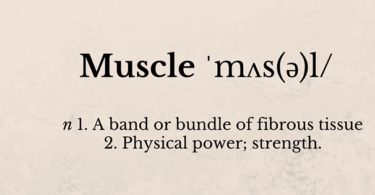
See, what Baumeister (and others) also say is that self-discipline is largely about habit. Most of the ‘decisions’ you make in a typical day aren’t actually decisions at all – they’re just automatic processes you go through. Secondly, modern researchers now think that willpower is like a muscle: you can exercise it to make it stronger. What does that mean? If you’re starting a new way of eating, exercise regime, writing routine or set of working practises, it might be tough, but you can stick it out. You can manage things by creating if-then plans, so that if your willpower’s at a low ebb you fall back on a predetermined strategy. You can say ‘I don’t,’ rather than ‘I can’t,’ because that makes it easier to resist temptation. You can focus on the pride you’ll feel from following your strategy, rather than the shame you’ll feel if you don’t.

Those are three examples of how to make self-discipline easier. There are dozens. The important thing is to remember: self-discipline is more important than how clever or pretty or strong you are. It can make you into anything you want. Look what it did for Teddy.

HOMEWORK: Pick a new habit you’d like to form and spend this week trying to ‘automate’ it. That might be pressups before the shower, writing when you get up, or getting the most important thing done first thing in the morning every day. You might as well read Roosevelt’s wikipedia page. Oh, and check out Sharpwriter, who drew the Teddy/Bigfoot battle. He is awesome.

The White Room: or, why Angry Birds is stopping you from getting the most out of life

I wish I had a real one of these.

I wish I had a real one of these.

Back when I worked on videogames magazines, I once got drunk with a friend of mine and invented a system of games reviewing that would be an alternative to the X out of 10 scores given by the rest of the industry. It was called The White Room. Basically, imagine there’s a white room. The walls are perfectly blank, there are no windows, and there’s a nice chair in it. Picture that. Peaceful, right?

Now: you have a choice, and the choice is the ‘score’. Would you rather play the game you’re supposed to be playing, or sit in the white room and silently think about whatever you like?

An enormous amount of games fail this test. So do an enormous amount of films, TV shows, books, comics and other forms of media. Things I would rather sit in a featureless white room than consciously (or passively) participate in ever again include: Two And A Half Men, any Facebook game, Fruit Ninja, Sudoku, every single film by the Wayans brothers, Minesweeper, Def Jam Icon (a sequel so disappointing that I still think about it from time to time with a shudder), every book that Dan Brown has written, and, obviously, Angry Birds. I would sit in silent contemplation rather than subject myself to any of them for a second longer than I already have, and that would be fine by me.

Now, your list will be different to mine. But you should have a list. Just because iPads, phones, laptops and MP3 players make it possible for you to be entertained every second you’re awake, that doesn’t make it desirable. Angry Birds isn’t teaching you anything, but it isn’t giving you any space to think, either. Playing Puzzle Bobble is making you better at playing Puzzle Bobble, but it isn’t helping you decide how you feel about the world, or mentally work on whatever projects you’ve got going on, or decide what you want to do in the future. Solitaire isn’t even that much fun, but it will still eat away at the only life you will ever have.

Make the list. Chuck away the chaff. I’ve mentally written books and rehearsed jiu-jitsu positions and thought of jokes and firmed up my own feelings about the world and my place in it on tube trains and the walk to work, in the spaces when it’s oh-so-tempting to just fill the void with something, anything that’s superficially entertaining. You could probably do something even better.

HOMEWORK: This week, don’t just turn to a game or TV show because you’ve got nothing better to do – decide whether it’s a better thing to do than sitting and thinking for a while. If you’re feeling brave, ditch your MP3 player – I did that for a couple of weeks, and I was amazed by how much clarity of thought I had while wandering around. Decide your own level. But sit in the White Room for a while.

Read Hard: Bulletproof Your Head

Note from the editor: Books are excellent. Read Hard is a semi-regular column about some of the books you ought to read. For the first installment in this series, look here. 

Charles Xavier's best superpower? He's immune to your stupid ideas.

Charles Xavier’s best superpower? He’s immune to your stupid ideas.

Contrary to how this site occasionally sounds, I don’t think I know everything. What I think I am quite good at is evaluating new ideas, which isn’t a skill you’re born with, and isn’t really something that’s emphasised enough, considering that it’s one of the most fundamental things you might need to do in your whole life. Does God exist or not? Which get-rich quick book should I buy? Which programme promising me a six-pack is going to get me the best results? This post won’t answer a single one of those questions, but it will point you towards some books that’ll help you answer them on your own. These books can’t entirely bulletproof your head against stupid ideas, but they’ll give you a good start.

The Black Swan

Nicolas Nassem Taleb

blackswan

Think about this: out of every one of the hundreds of thousands of people who play slot machines in Vegas every year, quite a few are going to come out ahead. Some of them might even come back the next year, and come out ahead again. The group gets smaller, sure – but the starting group was big enough that maybe one guy makes big money every year, for five years, and then writes a book about how to win big on slot machines. The question is, would you buy that book?

Nicolas Taleb’s central point in The Black Swan is that a lot of professions work like that Vegas casino. Certain types of stockbroking, for instance, are virtually identical – by law there’s basically no skill to them, so you should be pretty wary of anyone writing a book on how to get rich because of something that has worked for them. Maybe 10,000 other people entered the profession with similar skills, did similar things, and failed – but they lost money, and they got fired, and so they don’t get to write a cautionary tale about how it doesn’t work. Similarly, this principle is at work in professions that aren’t entirely luck-based: when some self-made entrepreneur talks about burning your boats, never looking back and the like, consider that he can say that because he’s already made it – maybe there are a thousand other guys who burned their boats and now just don’t have any fucking boats, let alone a blog or book deal. When you see Ryan Lochte flipping a tractor tyre, consider: is the tyre-flipping making him a better swimmer, or did the 10,000 hours of pool-time do that? When Will Smith tells you that you just have to work hard and believe in yourself, consider the possibility that that won’t be enough. Don’t give up on your dreams: just consider where you get your advice from.

Anyway, that’s what the Black Swan is about. It’s pretty heavy going, so you might want to dip a toe in with this excellent Malcolm Gladwell piece about Taleb himself. Once you’ve digested the thought process, you might want a more systematic way of evaluating ideas. Which brings us nicely to…

Bad Science

Ben Goldacre

image64

You’ve probably heard of this one. Outwardly it’s a collection of bang-your-head-on-the-desk anecdotes about homeopathy, anti-vaxers and outlandish medical claim, but more importantly – at least for this post’s sake – it’s a great primer in scientific thinking. To quote the awesome Carl Sagan:

‘Science is more than a body of knowledge. It’s a way of thinking.’ 

In other words, what you know about atoms or gravity or the large hadron collider isn’t as important as the system you use to check whether ideas are right or not. And beyond the anecdotes, that’s what Goldacre’s book is about: a way of analysing ideas and theories that’s systematic and sensible. Whether you agree with his specific arguments or not, you can’t fault his logic.

Flat Earth News

Nick Davies

cover_0

This book, by Godzilla-among-investigative-journalists Nick Davies, is the perfect companion piece to Bad Science. It’s about how stupid ideas – whether they’re PR fluff, scare stories, deliberate plants or just outbreaks of mass hysteria – get into the news, and why you should always consider the source of what you see or read. Bonus: once you realise that 80% of most news content is just fill-the-pages tosh (or churnalism, as Davies has it), you’ll have more time to spend getting your bench press up to par, or reading Davies’ other uniformly excellent books – I’d start with Dark Heart.

The Full Facts Book of Cold Reading

Ian Rowland

Ian%20Rowlands%20-%20The%20Full%20Facts%20Book%20Of%20Cold%20Reading

Odd choice? Maybe. Perhaps you don’t think cold reading has much effect on your life, or that you’re too smart to be taken in by it. Fair enough: maybe you don’t believe in horoscopes or tarot cards. But cold reading goes beyond that: pickup artists, salesmen and businesspeople use it all the time. Some people know they’re doing it, and some don’t: maybe the astrologer who says ‘You’re doing some serious self-examination at the moment,’ really believes that’s an insight provided by the stars, and maybe guy in a bar who goes ‘I can tell you’re a bit of a perfectionist in some ways, and quite talented when you put your mind to things,’ actually thinks he’s developed a deep connection with you in ten minutes. Maybe not, though: and either way, this book will allow you to assess those sorts of statements for what they really are. It’s a very swift read, and it’ll change the way you think about things: like all these books, really.

Desk vs Gym: How writing a zombie comedy is helping me hit a triple-bodyweight deadlift

'I've just had a great idea for a narrative device.'

‘I’ve just had a great idea for a narrative device.’

So: as even the most disinterested readers of this site will know, two of my great joys in life are writing stuff and deadlifting. I’ve written five books (four published by children’s publisher Scholastic, one feminist zombie comedy) and I’ve deadlifted a small van in competition (ten reps, at the expense of several thousand blood vessels in my face). Since I’m not one to mess around, two of my goals this year are to:

a) Write a better, more exciting and even stupider sequel to the zombie book.

b) Finally hit a triple-bodyweight deadlift.

Now: more astute readers of this site will know that I also think that doing most difficult things will prepare you for doing other difficult things. Or, in the words of Miyamoto Musashi: ‘When you know the way broadly, you see it in all things.’ So you’re probably wondering what I think deadlifting and writing a sequel to the book that SFX described as ‘A joy to read’ have in common. WONDER NO MORE.

1. You might not ever do it

This is honestly the most important thing to acknowledge. I’ve heard writing a novel compared to running a marathon or being pregnant, but that’s simply wrong – in a marathon there’s a clearly-defined finish line and you’ll get there if you keep putting one foot in front of another, and, though I’m no expert on having babies, I’m pretty sure they come out after nine months however much you procrastinate. In a novel, though, you can get stuck on rewrites, or decide whole swathes aren’t good enough, or simply slow down and get mired in despair. Similarly, in deadlifting, you can just get fat, or drink too much, or get old, or just not ever actually train enough. At some point, your chance will be gone. You have to acknowledge the possibility of failure. Because otherwise you won’t be scared enough of it to put in the work.

2. You won’t get it done in a day

Because of the scale of both goals, no single day – however monstrous the workout, however many synonyms for ‘said’ you come up with – is going to get it done, or even make a monumental difference. That one time you get super-motivated is not going to get things done. What matters more than one big day is consistency – sitting at your desk or showing up at the gym day after day after day, and really trying, even when you can’t think of anything or your legs are still sore.

3. Gadgets cannot help you

Anthony Trollope (who forced himself to write 2,500 words a day before he went to his job at the local post office) didn’t have a subscription to Scrivener, and Ernie Frantz hit a near quadruple-bodyweight deadlift before the 531 plan, Jack3D or internet message boards were invented. Yes, it is a fine thing that so many resources exist to help you in your goals, but a lot of them aren’t helping you, and honestly, plenty of them are probably holding you back. Before you read another book about plot structure or programme-hop to another training plan, consider whether you’d get better results by just working a bit harder.

4. It’s about more than just time at the desk/gym

Either of these goals are tough enough that you’re unlikely to get to them without making changes to the rest of your life. Realistically, the four hours a week you spend in the gym aren’t as important as the rest of the week, when you’re eating properly, making sure you get enough sleep to recover and resisting the temptation to go get shitfaced. Similarly, writing a novel is about more than just your special alone time in the house – it’s about sketching out plot points on post-it notes at lunch, carrying a notebook wherever you go (everybody says this, nobody does it) and resisting the temptation to go get shitfaced. If you can’t face that, you won’t get there.

5. IT ISN’T AS HARD AS I’VE JUST MADE IT SOUND

More people than you’d think are capable of writing a novel. More people than you’d think are capable of a triple-bodyweight deadlift. Yes, they seem hard if you look at all the resources created to dealing with them, or if you listen to many of your friends and colleagues, or build them up too much, or mess around for years pretending to do them without actually buckling down to doing them. But they aren’t beyond you. You could get them done. I’m going to do both this year, and I’m no more badass than you. What’s stopping you?

HOMEWORK: If you don’t care about writing a book or doing a physical challnge, work out how this all applies to something you do care about. And start getting it done.

Climbing vs Mortgage Advisers: or, getting out of your comfort zone

comfortzone

Serious question: when was the last time you stepped out of your comfort zone?

Until fairly recently, I’d have said, oh, all the time. Something about deadlifting or fighting people or going to a dance class or falling off a climbing wall, or things like that. But then I thought about it, and that’s not true. Not really.

I’ve been lifting and fighting for a long time. They aren’t outside my comfort zone at all. Even the worst-case scenarios that occur in them have predictable outcomes, things that I can cope with. If I do a workout like Jonescrawl – 25 box jumps, 10 90kg deadlifts, repeated for three rounds – I’ll hate it and feel like I’m going to be sick and perhaps roll melodramatically around on the floor afterwards, but it’s not totally out of my frame of reference. It’s part of my schema – I know how to cope with it. Lifting heavy things and falling off big things and getting elbowed in the face can build my ability to cope with adversity elsewhere, but they don’t really provide much adversity in themselves.

Here’s something a personal trainer friend said to me the other day: when he sees fat, unfit people who are new to the gym, he tries to put himself in their shoes. That doesn’t mean doing workouts that he finds tough: doing workouts isn’t uncomfortable for him. It means going to somewhere that’s unfamiliar, doing something you’ve never done before, which you know almost nothing about. Maybe that new guy sweating and hurting his way through a kettlebell workout that looks like your warmup has everything else in his life sorted: his finances and career is are locked down and under control. He’s outside his comfort zone now, but you’re sitting happily in yours. Right now, I’d be more scared of walking into a mortgage adviser’s office than trying to climb a V5 pitch over a load of pointy gravel. That’s no good.

So that’s what I’ll be doing more of this year: getting outside of my comfort zone. Sorting out my knowledge of things I haven’t traditionally enjoyed or understood as much as my stupid, dangerous hobbies – things like finances, mortgages and better organization in business. Things that scare me more than stepping into a cage or push-pressing 110kg over my head. The more I do it, the more my comfort zone should expand. One day, maybe, I won’t be scared of anything.

HOMEWORK: Work out where your comfort zone is. Work out what’s outside it. Consider getting on that.

Why You Should Definitely Learn To Fight

'I am going to kick your fucking ass.'

‘I am going to kick your fucking ass.’

I am not a violent person. I haven’t been in a non-organised, non-officiated fight since I was seven, when my class went to war with our opposite numbers in 4B over an imaginary football-related slight. But since learning to fight – and subsequently getting pretty good at it – I’ve become something of an evangelist for fighting, like some people are for juice diets, yoga, or the Kabbalah. It’ll make you more confident, I say, and change the way you think about things, and get you fit and make everything else less scary. It is also brilliant fun.

None of those things work, obviously, because fighting itself seems scary and difficult and doesn’t seem like a great trade-off for the slightly nebulous benefits mentioned above. So here’s what learning to fight really does: it gives you options.

I’ve often said that my (currently hypothetical) daughter will learn to choke a man unconscious before she goes on her first date, and I stand by that. She’ll also learn that the best way to deal with the threat of Bad Things Happening, in order, is:

1. Try to avoid places and situations that are likely to be dangerous or unpleasant in the first place.
2. When unpleasantness seems likely or unavoidable, leave: either at a brisk walk or a run.
3. If someone wants something from you that isn’t going to ruin your life, consider giving it to them.
4. If all the above fails, start breaking limbs and choking people unconscious.

It takes surprisingly little time to learn 4. – probably less than you spent getting ready for your driving test or watching the last season of Homeland, if you do things properly. I choked out a karate black belt 20kg heavier than me after barely six hours of tuition when I started, and I know plenty of people with similar stories. The trick is picking the right sort of fighting.

Boxing, Muay Thai, and most sorts of striking are not that useful for actual fighting. You aren’t going to learn to knock a bigger opponent out in any decent space of time. Also, if you don’t knock them out with one punch then you’re in a clinch – watch how often this happens in actual boxing – and then nothing you’ve learned is going to work. Also also, these styles are based on being upright, having lots of space, and the ground underneath you being grippy and stable. If you’re squashed into a car seat, on the underground or even just up against a wall, almost nothing you’ve learned is going to work.

The actual best thing to learn  is some sort of grappling. I do Brazilian Jiu-Jitsu because it’s specifically designed for fighting in unpleasant, scrappy circumstances, though other styles – judo, sambo, catch wrestling – are available. The main point is that you pick a style that lets you spar, or ‘roll’ at near-full-intensity, so that you get used to the feel of someone fighting you back.

Most of these styles are technically sports, so there’s no hitting or biting or gouging, but everything is about joint locks,  chokes, and ‘positional control’ so if you’re ‘winning’ in sparring, then it’s fairly likely that you’d be able to subdue someone (more or less painfully) in a real fight. I know men – and women – that have used it to subdue burglars/muggers/unruly bar customers with less than six months’ training in BJJ, and one guy who used it to defuse a road-rage situation while he was still jammed into his car seat. Because it’s based on fundamental principles of movement and leverage, it’ll let you respond to situations with appropriate amounts of force – after all, you may not want to eye-gouge someone who grabs your wrist in a pub, or punch a friend unconscious when they go crazy in a bar – but you might want to deter or restrain them. If you see some lunatic getting aggressive with someone else they shouldn’t, it’ll give you options in that situation. It’ll also help you get off your back/get an attacker off you if you somehow end up in a very bad situation: boxing definitely won’t.

The slight downside is that all the body-to-body contact might feel a bit uncomfortable, at least at first. But there are options, especially if you’re a lady: women-only classes or learning online, or only sparring with teachers you’re comfortable with are viable and sensible options. Once you’re more used to it, you can always make things tougher if you want.

You can’t prepare for everything: no martial art is going to let you fight five people or a man with a knife, whatever Steven Seagal says. You aren’t going to be able to do everything. But you are going to be able to fight better in some situations, and that might all the difference between something terrible happening or not. And, of course, once you can fight, nobody’s saying you have to: if you think you’re going to make a situation worse by resorting to violence, you can just leave, or ignore the insults, or hand over the iPhone, or do whatever else will make it go away.

But you ought to learn to do it. You should learn to defend yourself, and you should know, that if it absolutely comes down it it, you can defend other people. You shouldn’t have any doubt in your mind about whether you can fight or not, because you might need to. With statistics showing that one in five women has been a victim of a sexual offence and no sign of street harassment abating, you owe it to yourself, or others to be able to threaten to kick someone’s ass and mean it. Because even if you aren’t worried about any of the other stuff, there might be a day when you have no other option but to fight. And if that happens, you need to fight well.

HOMEWORK: At least investigate the possibility of learning to fight properly. It might be the best thing you ever do.

Follow

Get every new post delivered to your Inbox.

Join 51 other followers